
What the Executive Order on Psychedelics Means for Appalachia
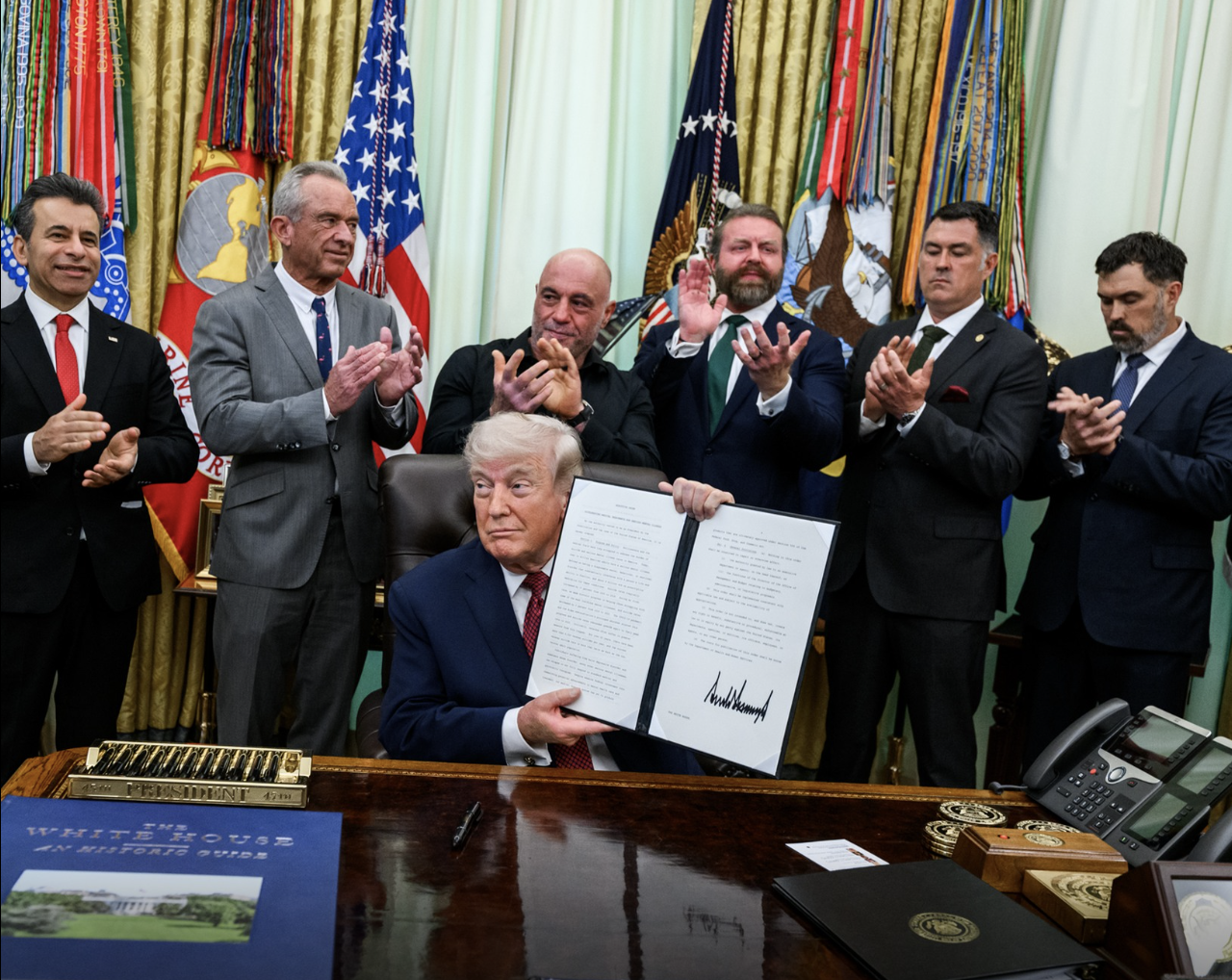
President Donald J. Trump holds up the signed executive order on Sunday, April 19, 2026.
Last week's executive order made for a buzzy Bicycle Day.
In case you missed it: President Trump—flanked by podcaster Joe Rogan, Americans for Ibogaine founder Bryan Hubbard, Health & Human Services Secretary Robert F. Kennedy, Jr., and others—signed an executive order intended to accelerate psychedelic research and treatment options.
This is the most meaningful federal action on psychedelics since passage of the Controlled Substances Act in 1970, which moved all regulated substances into five categories and placed psychedelics in Schedule I, denoting no medical use and high potential for abuse.
Decades of psychedelic research before and after the CSA's passage have proven otherwise, but governing bodies have been slow to shift. So this announcement deserves credit. It's a hugely impactful and influential statement from the highest levels of the federal government. It's also movement on an issue that has increasingly received bipartisan support thanks to powerful advocates.
What This Doesn't Mean
The executive order does not change the legal status of psychedelics at the federal level. Policy changes more slowly than the quick speed of the executive branch's whim—and there is a lot to figure out.
What's Happening Now
The federal government is making moves
So far, Commissioner's National Priority Vouchers (CNPVs) have been awarded to three psychedelics programs: Compass, Transcend (which is being acquired by Otsuka), and Usona. Vouchers dramatically reduce review and rollout timelines for drugs that align with national health priorities (from 6+ months to 1-2 months).
The FDA is also working on final guidance to provide recommendations to sponsors developing these products.
The Senate Veterans' Affairs Committee just scheduled a hearing for Wednesday, April 28, on the Veterans Health administration Novel Therapeutics Preparedness Act, which would create a dedicated Office of Novel Therapeutics inside the VA, as well as a Clinical Implementation Program for Emerging Therapeutics.
And while it's not specifically related to psychedelics, the federal government has also moved to reschedule state-licensed medical marijuana and FDA-approved marijuana products from Schedule I to Schedule III (and yes, we have questions about that too).
Cultural and spiritual uses of psychedelics have been sidelined
The executive order explicitly privileges the medical model of psychedelics, and makes no mention of these substances' uses in religious or cultural frameworks or in the psychedelic underground (though it does open the door to rescheduling reviews for Schedule I substances that have gone through Phase 3 clinical trials). That's not unexpected, but it means that critical questions about the complexity of why, how, and by whom psychedelics are used must be centered as much as possible as conversations continue.
So far, the Native American Church of North America has released a statement reiterating their stance that peyote "must be excluded from federal research and treatment frameworks."
What's Next—and Why It Matters for Appalachia
Appalachia currently lacks the infrastructure necessary to support a large-scale, effective, and sustainable rollout of psychedelic medicine and treatment options. But the order will help make space for more conversations. More questions. More interest.
That's where we come in. Appalachian Convergence Lab was born out of the urgent need to fill critical gaps in the psychedelic movement by bringing Appalachians to the tables where policy discussions, education, and training happen. By advocating for integrative solutions in mind, medicine, and law, we are helping to position Appalachia as a key player within the psychedelic movement.
Hospitals, clinics, and treatment centers need staff knowledgeable about psychedelics. Policies and procedures must be created that provide foundational support, while being flexible enough to accommodate evolving conversations and decisions.
Key movement continues to be made on the local and state level. Our Policy Report on Psychedelics in Appalachian States (available for our Community Sustainers) breaks down what's happening, giving you information, regional context, and accessible, neutral analysis and empowering Appalachian communities to engage with this topic confidently.
Wondering how psychedelic education might fit into your institution? Our Psychedelic Research Institutional Strategy Matrix (PRISM), also available for our Community Sustainers, lays out options in a clear, concise way to support your strategic planning.
Curious about how the history of psychedelics and the history of the region have intertwined? Our Historical Timeline of Psychedelics in Appalachia gives you the bigger picture.